

Parenting often comes with a difficult contradiction. Parents may love their children deeply and genuinely want the best for them, yet still find themselves struggling with tantrums, emotional outbursts, defiance, anxiety or moments when a child simply shuts down.
Connection Before Correction: What Your Child Wishes You Knew by Schweta Merchant Gandhi approaches these situations through the developing brain. Instead of treating every difficult behaviour as deliberate disobedience, the book encourages parents to understand what may be happening beneath the behaviour.
Drawing on neuroscience, psychology and practical parenting experience, the book introduces concepts such as the Upstairs and Downstairs Brain, Co-Regulation, the Staircase of Regulation, the Window of Tolerance and the central idea of Connection Before Correction.
The book’s approach is not about removing boundaries or allowing every behaviour. Instead, it argues for maintaining connection while setting appropriate limits, recognising that children often need emotional regulation and support before they are capable of responding to correction effectively.
About the Book
Its starting point is that children are still developing the neurological and emotional capacities required for self-control. Behaviours that adults may interpret as intentional misbehaviour can sometimes reflect a child’s inability to manage overwhelming emotions in that moment.
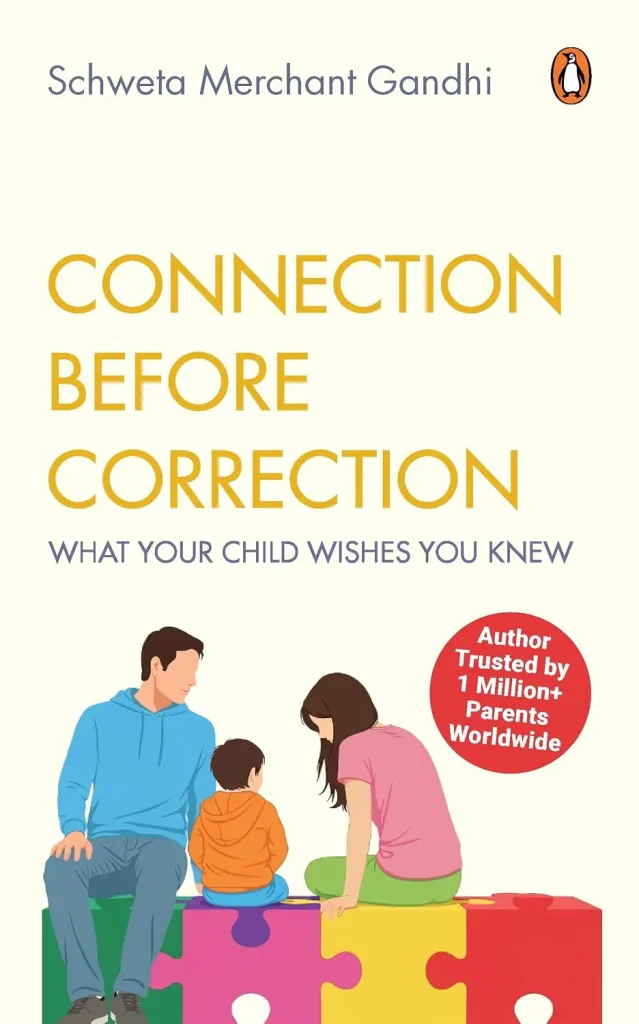
The book therefore asks parents to look beyond the behaviour itself and understand the developing brain behind it.
Some of its central concepts include:
- Upstairs and Downstairs Brain: A framework for understanding the difference between higher-level thinking and emotional or reactive responses.
- Staircase of Regulation: A way of understanding how children move between different states of emotional regulation.
- Co-Regulation: The idea that children often depend on regulated adults to help them manage intense emotions.
- Window of Tolerance: A framework for understanding the emotional zone in which a child can effectively process experiences and respond appropriately.
- Connection Before Correction: The book’s central philosophy that emotional connection can be an important foundation for effective boundaries and discipline.
Importantly, the book does not present connection as synonymous with permissiveness. Its approach attempts to combine emotional understanding with boundaries, helping parents respond to difficult behaviour without unnecessarily damaging the parent-child relationship.
Product Details
Publisher: Ebury Press
Publication Date: 31 August 2026
Language: English
Print Length: 416 pages
ISBN-10: 937730458X
ISBN-13: 978-9377304584
About the Author
Schweta Merchant Gandhi is the founder of HappyMinds, a child psychology and early learning school. She works as a child psychology educator, NLP master coach and subconscious mind coach, and is also a TEDx speaker and podcast host.
Her work focuses on connecting ideas from neuroscience and psychology with practical parenting. Over more than fifteen years, she has worked through programmes, workshops and digital content aimed at helping parents better understand children’s development and emotional needs.
The philosophy of Connection Before Correction forms the foundation of her approach. Through her work, she aims to help parents navigate the challenges of raising children while maintaining emotional connection and appropriate boundaries.
Read More: Lost Generation: We Have Everything, Still Empty by Aarav Singh

Review of Connection Before Correction
Connection Before Correction presents a parenting philosophy that is easy to understand but potentially significant in its implications: before expecting a child to regulate their behaviour, parents need to understand the child’s capacity to regulate emotions in the first place.
One of the book’s strongest features is its attempt to shift the conversation around difficult behaviour. Tantrums, defiance, anxiety and emotional shutdowns are often interpreted purely as behavioural problems. The book instead encourages parents to consider whether the child’s developing brain is equipped to handle the emotional situation.
This distinction is important because it changes the parent’s response. Instead of immediately asking, “How do I stop this behaviour?”, the approach encourages questions such as, “What is happening to my child right now?” and “What does my child need before they can respond appropriately?”
The Upstairs and Downstairs Brain framework provides an accessible way of understanding this distinction. Rather than presenting brain development as an abstract scientific subject, the framework gives parents a simple vocabulary for thinking about children’s emotional and cognitive responses.
The idea of co-regulation is another particularly relevant component. Children do not develop emotional regulation entirely in isolation. Their interactions with caregivers influence how they learn to recognise, manage and recover from emotional experiences. The book therefore places considerable importance on the parent’s own ability to remain regulated during difficult moments.
This is also where the title becomes meaningful. “Connection Before Correction” does not suggest that correction is unnecessary. Instead, it suggests that connection can come first. A child who is emotionally overwhelmed may not be in the best position to absorb a lecture, instruction or punishment. Establishing emotional safety may make it easier for the child to eventually understand a boundary.
The book’s emphasis on regulated adults is particularly interesting. Parents are often expected to teach children emotional control while simultaneously dealing with their own frustration, exhaustion and stress. By highlighting the adult’s emotional state, the book acknowledges that parenting is not simply a one-way process in which adults manage children.
Another strength is the distinction between understanding behaviour and excusing it. A brain-based parenting approach can sometimes be misunderstood as permissive parenting, but the book explicitly positions itself differently. Its focus is on maintaining boundaries while also recognising developmental limitations.
That balance makes the approach more practical. Parents do not have to choose between being emotionally responsive and being firm. The challenge is learning how to do both without turning discipline into disconnection.
The Window of Tolerance framework also contributes to this understanding by providing a way to think about emotional states. When children become overwhelmed, their ability to reason, communicate and respond constructively can be affected. Recognising these states can help parents adjust their response rather than escalating an already difficult situation.
The book’s 416-page length allows considerable space for these ideas and makes it more substantial than a quick collection of parenting tips. Readers looking for simple one-line solutions may find the approach more detailed than expected, but parents genuinely interested in understanding the psychology behind everyday behaviour may appreciate the depth.
The greatest value of the book appears to lie in its change of perspective. It encourages parents to see the child behind the behaviour and, equally importantly, to examine the adult’s own response.
That does not mean every difficult behaviour should be accepted. Children still need boundaries, consistency and guidance. The difference is that discipline can be approached with an understanding of development rather than assuming that every emotional reaction is a deliberate challenge to parental authority.
Overall, Connection Before Correction offers a compassionate, brain-based perspective on parenting. Its central message is particularly relevant to parents who find themselves repeatedly caught between maintaining discipline and preserving closeness with their children.
Rather than promising a perfect parenting formula, the book places the emphasis on understanding, regulation and relationship. Its most useful idea may ultimately be its simplest: children need adults who can remain connected to them even when their behaviour becomes difficult.
How to Read Connection Before Correction Online
Readers who want to read Connection Before Correction online should check authorised ebook retailers and legitimate digital reading platforms for availability. If an official digital edition is available, using it ensures access to the complete published work while supporting the author and publisher.
Why Read Connection Before Correction?
- It explains difficult behaviour through brain development: The book encourages parents to look beyond surface-level behaviour.
- It focuses on emotional regulation: Parents learn why regulation can be an important foundation for effective communication and discipline.
- It introduces practical psychological frameworks: Concepts such as co-regulation, the Window of Tolerance and the Upstairs and Downstairs Brain make complex ideas more accessible.
- It balances connection and boundaries: The approach does not advocate permissive parenting but explores how parents can maintain limits without sacrificing emotional connection.
- It considers the parent’s role: The book recognises that a child’s emotional environment is influenced significantly by the regulation and responses of caregivers.
- It encourages reflection rather than quick fixes: Instead of offering a single solution for every tantrum or emotional outburst, it encourages parents to understand the circumstances behind behaviour.
Conclusion
Connection Before Correction offers a thoughtful perspective on one of parenting’s most difficult challenges: how to guide children’s behaviour without losing emotional connection.
Its brain-based approach encourages parents to understand that children are still developing the ability to regulate emotions, manage impulses and respond rationally to stressful situations. From this perspective, difficult behaviour can become an opportunity for understanding rather than simply a reason for punishment.
The book’s central philosophy does not require parents to abandon boundaries. Instead, it suggests that connection and regulation can make those boundaries more effective.
For parents interested in neuroscience-informed parenting, emotional regulation and healthier parent-child relationships, Connection Before Correction provides a comprehensive framework for reconsidering how discipline and connection can work together.
Ultimately, the book’s message is both simple and challenging: children do not need parents who respond perfectly every time. They need adults who understand that connection can remain important even in the moments when correction becomes necessary.
FAQ on Connection Before Correction
What is Connection Before Correction about?
It is a brain-based parenting guide that explores children’s emotional regulation, brain development, behaviour and the importance of maintaining connection while establishing appropriate boundaries.
What does “Connection Before Correction” mean?
The concept suggests that parents should establish emotional connection and help a child regulate before attempting to correct difficult behaviour. It does not mean that boundaries or discipline should be removed.
What is co-regulation in parenting?
Co-regulation refers to the role caregivers can play in helping children manage their emotions. A calm and regulated adult can provide support while a child is learning to develop independent emotional regulation.
What is the Upstairs and Downstairs Brain?
It is a simplified framework used to describe different aspects of brain functioning, particularly the relationship between higher-level thinking and more reactive emotional responses.
Who should read this book?
The book is particularly suited to parents, caregivers, educators and readers interested in child psychology, emotional regulation and brain-based approaches to parenting.
Is Connection Before Correction a permissive parenting book?
No. The book explicitly distinguishes connection-based parenting from permissive parenting. Its approach aims to combine emotional understanding with clear and appropriate boundaries.
Is there a Connection Before Correction PDF download available?
Readers should obtain the book through authorised retailers or use an officially released digital edition if available. Unauthorised PDF copies may infringe copyright. Purchasing the original book supports the author and publisher and ensures access to the complete authorised edition.
